Resources
Stay informed
Matles Test
Contents
Test protocol
Context
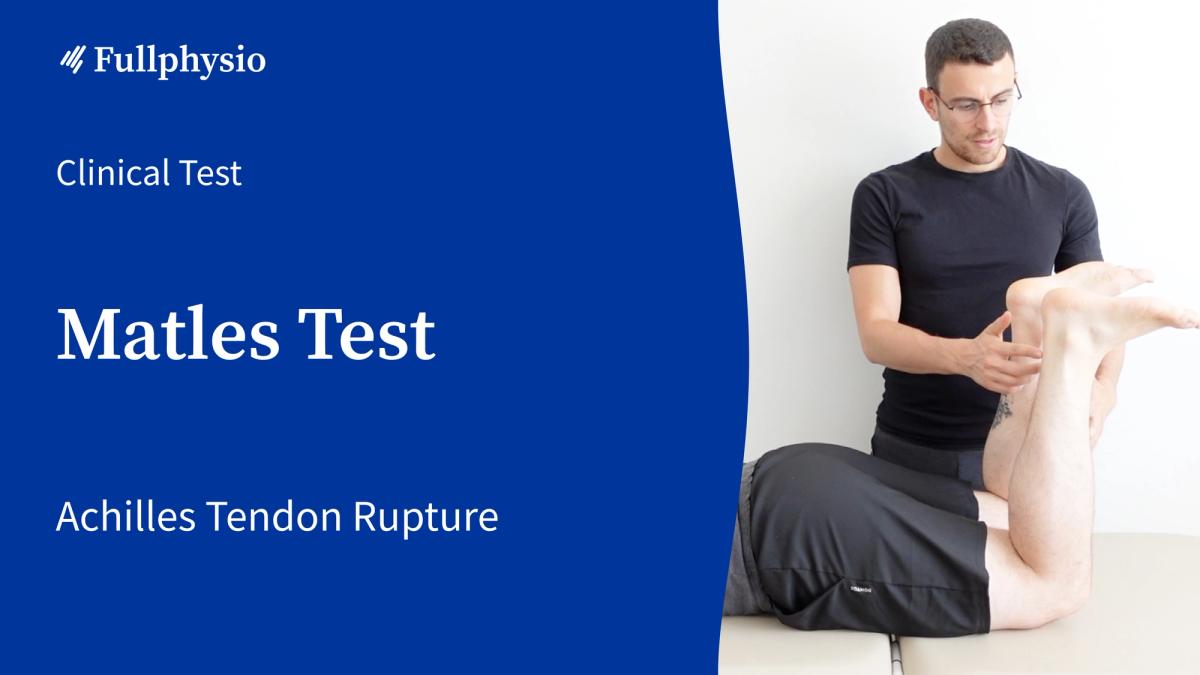
The Knee Flexion Test or Matles Test can be used in the diagnosis of an Achilles tendon rupture.
The Achilles tendon is the largest and most frequently torn tendon in the human body (Maffulli, 1998; Longo et al., 2009; Reiman et al., 2014). Indeed, Achilles tendon injuries are among the most common sports-related injuries, particularly in activities requiring sudden, repeated movements, such as sprints, jumps, or changes of direction (Jozsa et al., 1989; Reiman et al., 2014).
The precise diagnosis of an Achilles tendon injury, such as tendinopathy or Achilles tendon tear, is not always clear and straightforward (Reiman et al., 2014).
When we examine the injury acutely, we can see and palpate a gap that indicates a tear in the tendon structure. However, if we wait too long after the tear, the gap may be obliterated by edema, making palpation unreliable and increasing the risk of misdiagnosis (Maffulli, 1998; Longo et al., 2009).
To improve clinical examination, several tests have been described for diagnosing Achilles tendon rupture. These include the calf compression test (also known as the Thompson Test) and the Matles Test (Ernat et al., 2019).
Video of the Test
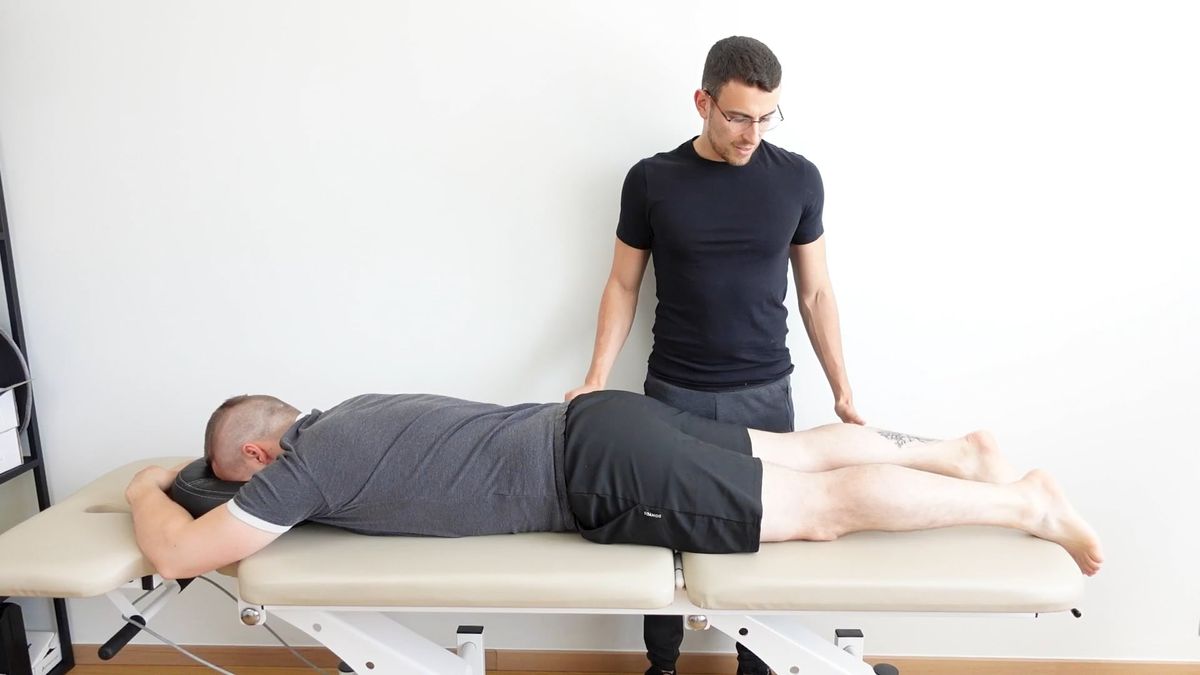
Execution
To perform the Matles Test, the patient lies prone and flexes their knees to 90°. We then observe the position of their feet (Matles, 1975). A foot with an intact Achilles tendon will go into slight plantar flexion, whereas a total rupture of the Achilles tendon can be seen with the foot in dorsiflexion. Therefore, if the foot of the affected side falls into a neutral or dorsiflexion position, the test is positive and an Achilles tendon tear is diagnosed (Maffulli, 1998; Longo et al., 2009; Reiman et al., 2014).
Clinical Value
In 1998, Maffulli reported a sensitivity of 88% and a specificity of 85% in the diagnosis of Achilles tendon rupture (Maffulli, 1998). The systematic review and meta-analysis by Reiman et al. in 2014 also recommends using the Thompson Test for the diagnosis of a total rupture of the Achilles tendon (Reiman et al., 2014).
Bibliography
Ernat, J. J., Johnson, J. D., Anderson, C. D., Ryan, P. M., & Yim, D. G. (2019). Does Clinical Exam and Ultrasound Compare With MRI Findings When Assessing Tendon Approximation in Acute Achilles Tendon Tears? A Clinical Study. The Journal of Foot and Ankle Surgery: Official Publication of the American College of Foot and Ankle Surgeons, 58(1), 161‑164.
Jozsa, L.; Kvist, M.; Balint, B.J.; Reffy, A.; Jarvinen, M.; Lehto, M.; Barzo, M. (1989). *The role of recreational sport activity in Achilles tendon rupture: A clinical, pathoanatomical, and sociological study of 292 cases. The American Journal of Sports Medicine, 17(3), 338–343.*
Longo, Umile Giuseppe; Ronga, Mario; Maffulli, Nicola (2009). *Acute Ruptures of the Achilles Tendon. Sports Medicine and Arthroscopy Review, 17(2), 127–138.*
Maffulli, N. « The Clinical Diagnosis of Subcutaneous Tear of the Achilles Tendon. A Prospective Study in 174 Patients ». *The American Journal of Sports Medicine* 26, no 2 (avril 1998): 266‑70.
Matles, A. L. « Rupture of the Tendo Achilles: Another Diagnostic Sign ». *Bulletin of the Hospital for Joint Diseases* 36, no 1 (avril 1975): 48‑51.
Reiman, Michael; Burgi, Ciara; Strube, Eileen; Prue, Kevin; Ray, Keaton; Elliott, Amanda; Goode, Adam (2014). *The Utility of Clinical Measures for the Diagnosis of Achilles Tendon Injuries: A Systematic Review With Meta-Analysis. Journal of Athletic Training, 49(6), 820–829.